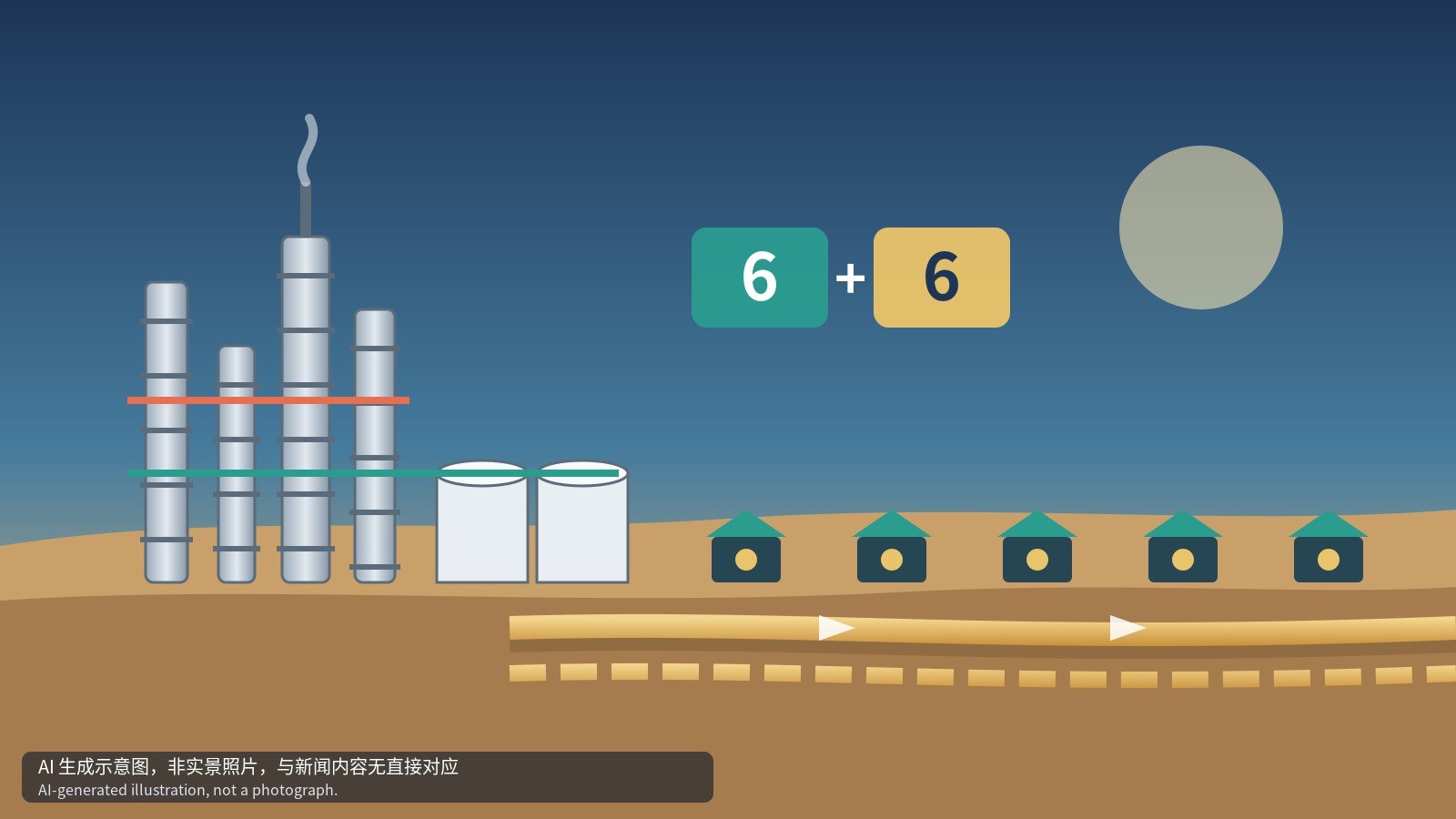
Kazakhstan plans to raise the capacity of the Shymkent oil refinery from 6 to 12 million tonnes of crude a year by 2030. The feasibility study is being prepared by CNPC's East China Design Institute. To keep the bigger plant supplied, two sections of the Kazakhstan-China oil pipeline system are also being studied for expansion: Kenkiyak-Atyrau to 15 million tonnes a year and Kenkiyak-Kumkol to 20 million tonnes a year.
The figures were presented on 1 October in Almaty at the 30th KIOGE oil and gas exhibition and conference by Daulet Arykbayev, director of the Energy Ministry's oil transportation and refining department, and were reported by Kazakhstanskaya Pravda and Check-point.kz. KazMunayGas (KMG) gave the same refinery target and pipeline capacities in a press release after talks with CNPC in Beijing on 31 July.
One caveat matters: both projects are still at the feasibility stage. Neither the ministry nor KMG has disclosed total investment, the general contractor, the financing structure or a construction start date.
A refinery that doubles in size
The Shymkent refinery is operated by PetroKazakhstan Oil Products (PKOP), and KMG describes the expansion as a joint project with CNPC. In its first-half 2026 operating results, published in August, KMG notes that it holds an indirect 49.72% of PKOP through a 50% stake in Valsera Holdings B.V. According to KMG figures from June 2025, the plant employs about 2,000 people, processed 2.55 million tonnes of crude in the first five months of 2025, and ran at an 82% light-product yield and 88% refining depth.
The expansion follows a "6+6" scheme: two process trains of 6 million tonnes a year each, with the new capacity fully integrated with existing units. Public records show how the project has moved.
In June 2025, KMG chairman Askhat Khassenov met CNPC chairman Dai Houliang in Astana. They agreed on the "6+6" configuration and on the need to move faster into the feasibility study.
In early February 2026, an Energy Ministry delegation held a strategy meeting with the Chinese side in Qingdao. PKOP handed over its initial data package, and the East China Design Institute confirmed it was ready to start under the approved terms of reference; the earlier terms of reference and pre-feasibility report form the design basis. The sides signed minutes of the meeting.
On 31 July 2026, KMG said the feasibility study was under way, with the technology audit, market studies, LP modelling and licensor selection already completed, and the configuration being optimised to cut capital costs.
On 1 October, the ministry reaffirmed the 2030 target at KIOGE and said the study is led by CNPC's East China Design Institute.
Where the crude comes from: expanding the Kazakhstan-China pipeline
Rules related to this news
- Kazakhstan China investment forum Almaty 2026On 25 September 2026 the Kazakhstan–China investment forum took place in Almaty: over 500 business representatives att…Text and legal basis →
- What is the Atyrau SEZ and which industries does it target?The Atyrau SEZ was created by Government Decree No.Text and legal basis →
Doubling throughput means more crude has to reach the plant. The ministry said that, to supply the expanded Shymkent refinery, an expansion of the Kazakhstan-China pipeline system is being worked out, with five new pumping stations and a 189 km loop, and that implementation is being considered on a parity basis with the Chinese side. KMG's July release said the Chinese side had completed its corporate procedures and that KMG and CNPC were starting the pipeline feasibility study.
Reporting by Neftegaz.ru and Inbusiness.kz describes the current state of the two sections. Kenkiyak-Atyrau entered service in 2003, has a design capacity of 6 million tonnes a year and can pump in both directions; in reverse mode it carries western Kazakh crude towards the Shymkent and Pavlodar refineries. Kenkiyak-Kumkol has operated since 2009, runs about 794 km and has a design capacity of 10 million tonnes a year; it is a link in the eastern route to the Atasu-Alashankou pipeline and on to the Chinese border. On the planned figures, the first section grows 2.5 times and the second doubles.
Both sections are already owned by Kazakh-Chinese joint ventures. According to the same outlets, Kenkiyak-Atyrau belongs to MunaiTas North-West Pipeline Company (KazTransOil 51%, a CNPC entity 49%), and Kenkiyak-Kumkol to Kazakhstan-China Pipeline, owned 50/50 by KazTransOil and CNODC.
The national refining picture
Shymkent is one piece of a wider programme. The ministry's target is total refining capacity of 39 million tonnes a year. Existing plants are to grow from 18 to 29.2 million tonnes: the Pavlodar petrochemical plant from 5.5 to 9 million tonnes by 2031, and the Atyrau refinery in stages from 5.5 to 6.7 million tonnes by 2028. A new complex of up to 10 million tonnes is targeted for commissioning by 2033; its pre-feasibility study is nearly complete, four candidate sites in the Ulytau, Atyrau, Mangystau and Turkistan regions are being compared, and a choice is due by year-end.
Of the three existing plants, Shymkent gets the largest increase, and it is the only project where the Chinese side is both shareholder and designer.
What it means for Chinese companies
A Chinese design institute is already involved at the design stage. If the project moves into basic engineering, equipment procurement and construction, it will create demand for process units, equipment, pumping-station and pipeline works. Tender procedures, timelines and local-content requirements have not been published.
The pipeline expansion is being considered on a parity basis, and both sections are owned by joint ventures. What role Chinese companies will play in financing and construction will become clear only once the feasibility study is finished and a scheme is chosen.
Companies following these projects should rely on official announcements from PKOP, KMG, KazTransOil and Kazakhstan's Energy Ministry.
Sources:
Kazakhstanskaya Pravda (1 October 2026), https://kazpravda.kz/n/minenergo-obyavilo-o-masshtabnom-roste-neftepererabotki-na-kioge-2026/
Check-point.kz (October 2026), https://check-point.kz/publication?id=10810
KazMunayGas (31 July 2026), https://www.kmg.kz/ru/press-center/press-releases/z-i-cnpc/
KMG (15 June 2025), https://www.kmg.kz/ru/press-center/press-releases/pkop-cnpc/
KMG, first-half 2026 operating results (18 August 2026), https://www.kmg.kz/ru/press-center/press-releases/pr-06-2026/
Bes.media (3 February 2026), https://bes.media/news/kazahstan-i-kitay-nachali-razrabotku-proekta-rasshireniya-shimkentskogo-npz-24995c/
Neftegaz.ru (5 September 2026), https://neftegaz.ru/news/transport-and-storage/935242-rasshirenie-nefteprovodov-kazakhstan-kitay-otsenivaetsya-v-327-mln-doll-ssha/
Inbusiness.kz (September 2026), https://www.inbusiness.kz/ru/last/kazahstan-vlozhit-327-mln-dollarov-v-rasshirenie-nefteprovoda-v-napravlenii-kitaya
Key facts
- The Ministry of Energy of Kazakhstan said that the Chimkent Oil Refinery plans to increase its annual processing capacity from 6 million tonnes to 12 million tonnes by 2030.
- The techno-economic feasibility study for the Chimkent Oil Refinery expansion is being prepared by PetroChina’s East China Design Institute, and the project remains at the feasibility-study stage.
- To secure feedstock, a study is under way into adding five pumping stations and a 189-km parallel line to the Kazakhstan–China crude oil pipeline system, with implementation to proceed on a reciprocal basis with the Chinese side.
- The annual throughput capacity of the Kenkiyak–Atyrau section of the Kazakhstan–China crude oil pipeline is planned to increase to 15 million tonnes, while that of the Kenkiyak–Kumkol section is planned to increase to 20 million tonnes.
- The expansion target and pipeline throughput capacity stated in a press release issued after talks between KazMunayGas and PetroChina are consistent with the figures announced by the Ministry of Energy.
- The Ministry of Energy of Kazakhstan has set a national crude oil processing capacity target of 39 million tonnes per year, with capacity at existing refineries planned to increase from 18 million tonnes to 29.2 million tonnes.
FAQ
What is the scale of the Chimkent Oil Refinery expansion, and what is its target date?
The Ministry of Energy of Kazakhstan said that the refinery’s annual processing capacity is planned to increase from 6 million tonnes to 12 million tonnes by 2030 under the “6+6” configuration, involving two process trains with capacities of 6 million tonnes each per year. The added capacity will be fully integrated with the existing facilities.
At what stage is the project currently?
The project is still at the feasibility-study stage, and the feasibility study is being prepared by PetroChina’s East China Design Institute. Neither the ministry nor KazMunayGas has announced the total investment, EPC contractor, financing method or construction start date.
How will the refinery secure feedstock after the expansion?
The ministry said that a study is under way to expand the Kazakhstan–China crude oil pipeline system, including the construction of five pumping stations and a 189-km parallel line, with implementation to proceed on a reciprocal basis with the Chinese side. The Chinese side has completed the necessary internal corporate procedures, and both sides have begun preparing the feasibility study for the pipeline expansion.
In which areas might Chinese-invested enterprises participate?
Chinese institutions are already involved in the design stage. If the project proceeds to detailed design, equipment procurement and construction, it will generate procurement demand for refining and petrochemical facilities, process equipment, pumping stations and pipeline construction. However, the tendering methods, timetable and localization requirements have not been announced.
Who are the main parties involved in the project?
The Chimkent Oil Refinery is operated by PKOP. KazMunayGas indirectly holds a 49.72% interest in PKOP through its 50% stake in Valsera Holdings, and its press release described the expansion as a joint project with PetroChina.