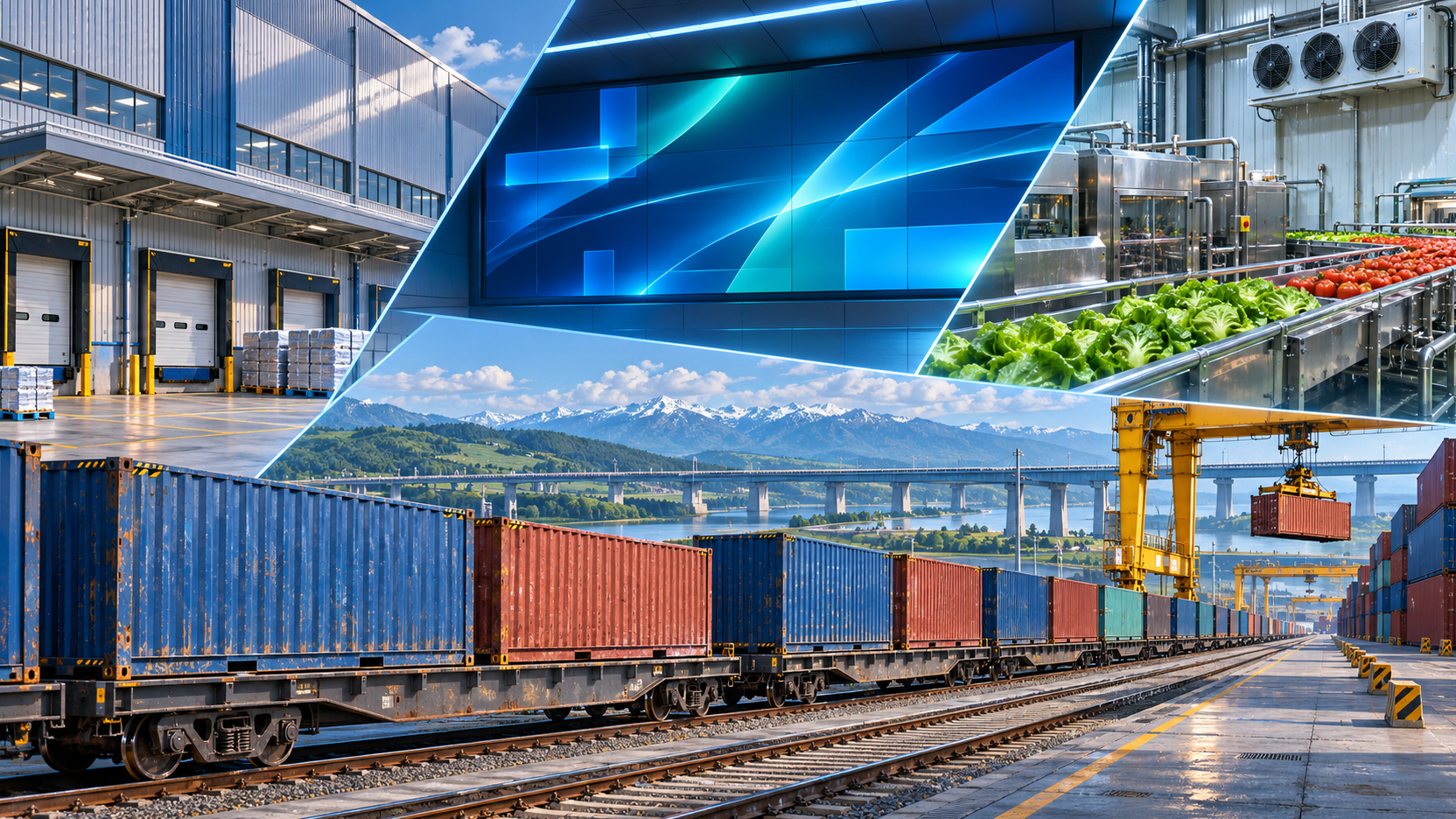
According to the official website of the President of the Republic of Kazakhstan (akorda.kz), President Kassym-Jomart Tokayev and President of Tajikistan Emomali Rahmon held bilateral talks and a joint media briefing on November 7, 2026.
What is the current scale of bilateral trade and the status of the new trade roadmap?
President Tokayev stated that bilateral trade is steadily approaching 2 billion US dollars, solidifying Kazakhstan's position among Tajikistan’s three largest foreign trading partners. To build upon this trajectory, the heads of state adopted a Roadmap for Increasing Trade through 2030 and instructed their respective cabinets to execute it. The adopted document establishes a policy framework rather than a funded commercial contract, with execution details subject to agency-level coordination.
What are the verified metrics and forward plans in agriculture and processing?
Last year, bilateral shipments of agricultural products rose by 11 percent to approximately 600 million US dollars, representing half of total bilateral trade in that calendar year. This historical 600 million figure reflects last year's performance and must not be conflated with the current overall trade figure approaching 2 billion dollars. The sides expressed readiness to expand mutual supplies of food products and evaluated the feasibility of establishing full value chains for agricultural processing, though specific sites and fiscal conditions remain unannounced.
Rules related to this news
- China Kazakhstan trade volume 2025According to China's General Administration of Customs, China–Kazakhstan trade in 2025 was USD 48.68 bn (+11%; Chinese…Text and legal basis →
- What is the Alatau Industrial Trade and Logistics Complex SEZ in Zhambyl region?The Alatau Industrial Trade and Logistics Complex SEZ was created by Government Decree No.Text and legal basis →
- How do I set up a logistics company in Almaty and what permits are needed for freight transport?Usually you first register an LLP (TOO): a private-business legal entity is registered within one working day of an e-…Text and legal basis →
How did freight volumes perform, and what tasks were assigned to existing mechanisms?
In the transit sector, bilateral road and rail freight volumes expanded by 8 and 15 percent respectively last year, reaching a combined total of around 7 million tons across both modes. The sides agreed to pay particular attention to transport digitalization to ensure seamless freight movement and to examine prospects for priority transport and logistics projects. To this end, an existing bilateral working group at the level of the national railway companies has been tasked with submitting specific proposals for cooperation.
Which industrial, energy, and digital domains were outlined for joint development?
Cooperation opportunities were identified across energy, hydrocarbons, mining and metallurgy, and processing sectors, supported by a preceding bilateral business forum. Kazakhstan proposed preparing a Comprehensive Plan for Cooperation through 2030. In technology, Kazakh e-government solutions had been previously transferred to Tajikistan, alongside joint initiatives in digital transboundary water accounting and monitoring. Binding contractual frameworks and delivery schedules remain subject to forthcoming intergovernmental and corporate pacts.
Policy sources are verifiable via official records; for operational inquiries, visit tumah.kz
Key facts
- Kazakhstan and Tajikistan adopted the Roadmap for Expanding Trade through 2030 on November 7, 2026.
- Bilateral trade between Kazakhstan and Tajikistan is steadily approaching US$2 billion.
- Last year, road freight between Kazakhstan and Tajikistan increased by 8%, while rail freight increased by 15%, totaling approximately 7 million tonnes.
- Last year, the value of agricultural product transportation between Kazakhstan and Tajikistan increased by 11%, reaching approximately US$600 million.
- Kazakhstan and Tajikistan discussed establishing a complete value chain for deep processing of agricultural products and agreed to focus on transport digitalization.
- The existing bilateral working group at the level of the national railway companies was instructed to submit specific cooperation proposals.
FAQ
What consensus was reached on the Roadmap for Expanding Trade?
On November 7, 2026, Kazakhstan and Tajikistan adopted the Roadmap for Expanding Trade through 2030 and instructed the two governments to advance its implementation. The document is a guiding work plan rather than a procurement contract with funding already allocated; annual targets and detailed border checkpoint clearance procedures still need to be specified.
What are the scales of bilateral trade and agricultural product transportation between the two countries?
Official data show that bilateral trade is steadily approaching US$2 billion. Last year, the value of agricultural product transportation increased by 11%, reaching approximately US$600 million and accounting for about half of total bilateral trade at the time. Agricultural product transportation value and overall trade value cannot be directly equated as indicators measured at the same point in time.
How has cross-border logistics grown, and what coordination mechanisms will follow?
Last year, road freight between the two countries increased by 8%, while rail freight increased by 15%, totaling approximately 7 million tonnes. The two sides agreed to focus on transport digitalization, and the existing bilateral working group at the level of the national railway companies is to submit specific cooperation proposals.
Which areas are covered by industrial cooperation, and what information remains to be clarified?
The two sides discussed establishing a complete value chain for deep processing of agricultural products and identified energy, oil and gas, mining and metallurgy, and processing manufacturing as priority areas. The official press release did not disclose production base locations, detailed tax incentives, commissioning schedules, or commercial indicators such as equity stakes in mine development, oil and gas supply volumes, or power grid dispatch arrangements.