Information current as of November 21, 2026 (Asia/Almaty); regulations are subject to the current text on adilet
Interpretation of Kazakhstan Artisanal Mining Licensing Regime and Compliance Key Points
Artisanal mining (prospecting) activities in Kazakhstan are strictly delimited small-scale placer and industrial waste mining operations, the regulatory framework of which is centrally codified in Chapter Thirty-Four of the Kazakhstan Code "On Subsoil and Subsoil Use." For executives of Chinese-funded enterprises monitoring placer gold extraction in Kazakhstan and exploring cooperation with local license holders, accurately grasping the statutory qualification requirements, exclusivity restrictions, equipment scale parameters, environmental reclamation guarantees, and legal liabilities of artisanal mining licenses is a prerequisite for evaluating cooperation risks. Prior to delving into small-scale extraction, readers may also refer to previous special features by Tumah: Compliance Q&A on Common Minerals Mining and Compliance Guide to Solid Minerals Mining Licenses.
Q: What is an artisanal mining license? What do its core rights and subject scope encompass?
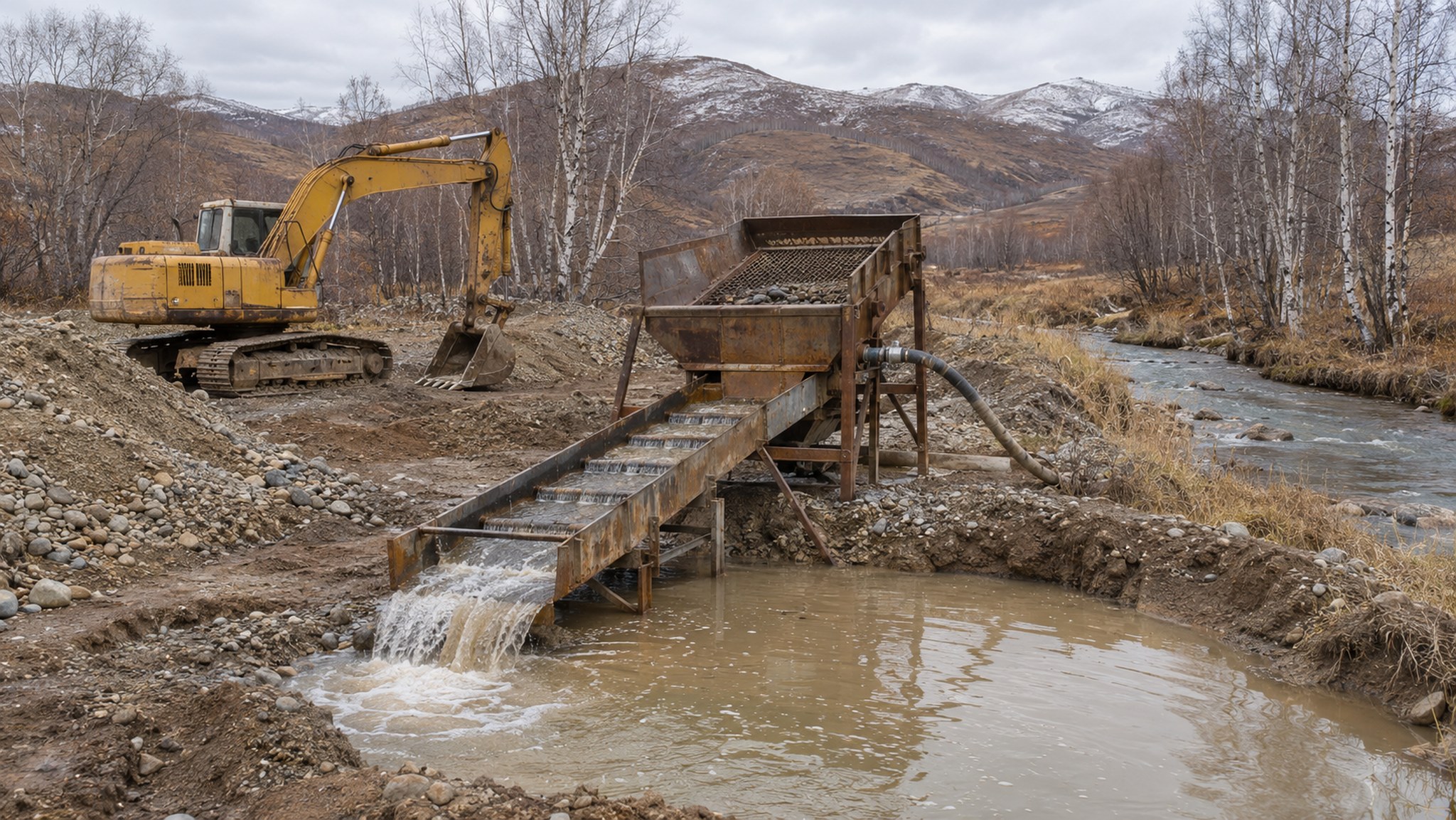
A: Pursuant to the provisions of the Code, under an artisanal mining license, its holder enjoys the exclusive right to use a subsoil parcel to conduct artisanal extraction operations for precious metals and gemstones on placer deposits and technogenic mineral formations (waste accumulations from mining and metallurgical industries); the methods of operation are confined to manual methods or the use of mechanized means and other low-power equipment, encompassing stripping operations, sand- and soil-washing operations, and other related operations Code "On Subsoil and Subsoil Use" (adilet). The specific list of precious metals and gemstones is established pursuant to the Law of the Republic of Kazakhstan "On Precious Metals and Precious Stones." The subsoil user is entitled to extract any type of precious metals and gemstones falling within the aforementioned statutory list.
Q: Who is eligible to apply for an artisanal mining license? Can foreign capital or legal entities apply directly or acquire one by transfer?
A: The law establishes exceptionally strict personal exclusivity requirements regarding the licensing subject. An artisanal mining license holder may only be a citizen of the Republic of Kazakhstan Code "On Subsoil and Subsoil Use" (adilet). At the same time, a single subject may hold only one artisanal mining license. Regarding commercial circulation, the law explicitly prohibits the transfer of subsoil use rights (or shares in subsoil use rights) or the encumbrance thereof on the basis of an artisanal mining license. As to whether foreign nationals, foreign legal entities, or foreign-invested enterprises may apply directly, the statutory text has explicitly limited eligibility strictly to citizens of the Republic of Kazakhstan; as for other civil and commercial cooperation models between offshore entities and licensed natural persons, their legal validity and compliance boundaries remain subject to case-by-case determinations by the competent authorities.
Q: In which areas may artisanal mining operations be conducted? What prohibited zones are prescribed by law?
A: Artisanal mining licenses are issued within territories determined through consultations between the local executive body of the region (oblast) and the regional subdivisions of the authorized environmental protection agency, the regional subdivisions of the authorized subsoil study agency, and the basin water inspection agencies for regulation of use and protection of water resources Code "On Subsoil and Subsoil Use" (adilet). The law prohibits the issuance of artisanal mining licenses in the following areas: specially protected natural territories possessing legal entity status and their protection zones; lands designated for sanatorium, recreational, and historical-cultural purposes; lands used for space activities, defense, and national security needs; settlements and territories situated within a distance of one thousand meters surrounding them; lands dedicated to burial grounds, graves, and cemeteries, as well as areas featuring underground structures unrelated to mineral exploration and mining; and state geological and mineral nature reserves. Where artisanal mining is conducted on land parcels belonging to private property owners or land users, or within subsoil parcels under another party's use, operations may proceed only after obtaining their prior consent.
Q: How is the application, review, and issuance procedure carried out? What materials must the applicant submit?
A: A party intending to obtain a license shall submit a written application to the local executive body of the region (oblast). The application shall state the applicant's identity information, place of residence, and the boundaries and total area of the parcel accompanied by a scale diagram specifying geographical coordinates of the corner points Code "On Subsoil and Subsoil Use" (adilet). Enclosed materials comprise notarized copies of identification documents, power of attorney for the representative (if applicable), a list of mechanized equipment and facilities proposed for use approved by the applicant along with an operational methodology description, letters of consent from the landowner/land user or the prior subsoil user, and an artisanal mining plan where mechanized equipment is intended to be used in the first year. Application documents must be prepared in Kazakh and Russian. The moment of application submission is determined by the date and time of receipt by the local executive body of the region (oblast) and is disclosed on the unified subsoil use platform. The local executive body of the region (oblast) reviews and renders a decision granting or refusing issuance within seven working days from the date of receiving the application. A party granted a license shall pay a signing bonus in the amount, manner, and time limits prescribed by tax legislation.
Q: What is the priority order when multiple applications involve the same territory? What are the statutory grounds for refusal of issuance?
A: Applications involving the same territory are reviewed sequentially in the order of their receipt; review of the next application may commence only after a decision of refusal has been made regarding the preceding reviewed application and ten working days have elapsed (or, if the applicant files an appeal in court, upon the entry into legal force of the court judgment) Code "On Subsoil and Subsoil Use" (adilet). The license is issued to the first applicant among the applications reviewed who satisfies the requirements of the Code. Statutory grounds for refusal of issuance include: the application or enclosed documents fail to satisfy the requirements of the Code or required documents are missing; the applicant has had an artisanal mining license revoked within two years prior to submitting the application on grounds stipulated by the Code; the territory applied for (or part thereof) falls within another person's licensed parcel or belongs to prohibited zones under the Code; a license previously held by the applicant for that parcel was terminated within one year prior to submitting the application; or the territory of the parcel applied for fails to conform to statutory area limits. A party refused issuance may file an appeal in accordance with the law within ten working days and also reserves the right to submit a new application.
Rules related to this news
Q: What are the specific physical metrics and equipment restrictions regarding the term of an artisanal mining license, parcel area, and extraction operations?
A: An artisanal mining license is valid for three years, and this term may be extended once for three years upon application by the holder; if, on the date of reviewing the application, the boundaries of the artisanal mining parcel fall entirely within the territory of a subsoil parcel provided to another party under a subsoil use contract or a subsoil use license issued by the competent authority, the issuing local executive body of the region (oblast) shall refuse extension of its validity, unless the artisanal miner has obtained that party's consent to continue artisanal mining Code "On Subsoil and Subsoil Use" (adilet). The parcel area must be no less than five hundred square meters and no greater than five hectares. In terms of equipment and operating conditions, the law imposes strict limitations: permission is granted to use one owned cargo truck with a carrying capacity not exceeding ten tons, drilling equipment, and excavators and/or bulldozers with a combined bucket capacity not exceeding zero point five cubic meters; drilling and other earthmoving operations must not exceed a depth of three meters calculated from the lowest point of the parcel surface; placer gold extraction must not exceed fifty kilograms of extracted gold per year. Concurrently, it is strictly prohibited to use excavators and bulldozers on water bodies and lands of the water fund within the parcel; it is strictly prohibited to utilize chemical reagents and explosive materials; it is strictly prohibited to construct permanent buildings and structures; and it is strictly prohibited to transport soil and extracted rock mass outside the boundaries of the parcel. The use of water resources does not require obtaining a dedicated permit or license, but only manual artisanal mining is permitted on water bodies and lands of the water fund, and water protection measures must be implemented.
Q: What is an artisanal mining plan? What are the statutory requirements for its preparation and approval?
A: A subsoil user employing mechanized means is entitled to carry out artisanal mining operations only in the presence of an artisanal mining plan Code "On Subsoil and Subsoil Use" (adilet). The artisanal mining plan is formulated and approved independently by the subsoil user and must elucidate the types, methods, means, estimated engineering volume, and timeline of operations in conjunction with ecological safety requirements. If mechanized means are planned for artisanal mining on river channels or lands of the water fund, an ecological impact screening must be conducted in accordance with the law. The artisanal mining plan must undergo a state ecological expert review, and the subsoil user may deploy mechanized means for artisanal mining operations only after obtaining a favorable conclusion of the state ecological expert review.
Q: How are artisanal miners' reporting obligations, elimination of consequences (reclamation), and their financial security regulated?
A: The licensee must submit extraction reports annually to the local executive body of the region (oblast), reporting by January thirtieth of each year on the precious metals and gemstones extracted during the preceding calendar year; periods of less than a full year are reported based on the actual duration, and the final incomplete period is reported within two months following license expiration Code "On Subsoil and Subsoil Use" (adilet). Upon termination of rights, the party concerned must complete land reclamation to eliminate consequences within six months following license termination (an extension of up to four months may be granted upon application if severely impeded by climatic conditions). Security for obligations to eliminate consequences takes the form of a pledge of bank deposit or a bank guarantee issued by a second-tier bank, with the total security amount calculated based on the number of hectares in the parcel and the monthly calculation index applicable in the application year; the security amount per hectare is determined by the local executive body of the region (oblast). Elimination works are deemed completed only after the signing of an elimination acceptance deed by a commission composed of representatives of the local executive body of the region (oblast), the environmental protection authority, and the user. Furthermore, prior to the expiration of the license validity period, the user is entitled to surrender any part of the parcel at any time, and elimination works on the surrendered portion must be executed prior to such surrender; however, if the subsoil user has not conducted artisanal mining on the surrendered parcel (or portion thereof), elimination works are not required, in which case a survey act confirming that no elimination works are needed on the parcel (or portion thereof) must be drawn up and signed by authorized personnel.
Q: What legal liabilities are incurred for breach of license obligations? What are the penalty standards and the procedure for license revocation?
A: Violation of artisanal mining license conditions will entail liability in the form of contractual penalties or license revocation Code "On Subsoil and Subsoil Use" (adilet). For violations of gold extraction limits, penalties are recovered at the rate of one hundred percent of the market value of the gold extracted in excess of the prescribed limit. Statutory grounds for license revocation include: the entry into legal force of a court ruling prohibiting subsoil use activities due to violations of ecological and industrial safety regulations; failure to pay the signing bonus within the time limits prescribed by tax legislation; commencing operations without providing financial security for the fulfillment of elimination of consequences; violation of operational restrictions, restrictions on mechanized equipment use, prohibitions on chemical reagents or explosives, prohibitions on permanent structures, or prohibitions on transporting soil and rock mass off-site; or conducting operations without an artisanal mining plan where one is required by law. For situations such as failure to provide security or violation of equipment/operational prohibitions, following the issuance of a written notice by the authority, the user must rectify the violation and submit a report within one month; upon failure to rectify within the prescribed time limit, a formal revocation notice is issued, and the license terminates one month after receipt of the notice. The user must cease operations under the revoked license and initiate elimination works upon the expiration of fifteen working days from the date of receiving the revocation notice.
| Core Compliance Dimension | Statutory Standards and Requirements | Legal Basis |
|---|---|---|
| Applicant Qualifications | Limited strictly to citizens of the Republic of Kazakhstan, one license per person; transfer or encumbrance of rights is prohibited | Article 263 |
| License Validity Term | Initial term of three years, extendable once for three years upon application; extension shall be refused if, on the date of application review, the parcel boundaries fall entirely within another party's contract or authority-issued license parcel without consent | Article 268 |
| Parcel Area Limits | No less than five hundred square meters and no greater than five hectares | Article 269 |
| Machinery and Working Depth | Restricted to one owned truck not exceeding ten tons, drilling equipment, and excavators/bulldozers with total bucket capacity not exceeding half a cubic meter; working depth must not exceed three meters from the lowest point of the surface | Article 270 |
| Extraction Output Limits | Placer gold extraction must not exceed fifty kilograms of extracted gold per year | Article 270 |
| Prohibited Operations | Use of chemical reagents and explosives is strictly prohibited; permanent structures are prohibited; off-site transport of soil and rock is prohibited; mechanized operations are prohibited on water bodies and lands of the water fund | Article 270, Article 271 |
| Mining Plan and Ecology | Deploying mechanized equipment requires formulation of a plan and receipt of a favorable conclusion from state ecological expert review; river channel areas must undergo impact screening | Article 273 |
| Periodic Reporting | Submission of reports on precious metals and gemstones extracted during the preceding year to the licensing authority by January thirtieth annually | Article 272 |
| Elimination Obligations and Security | Reclamation completed within six months after termination; security provided via second-tier bank guarantee or bank deposit pledge, calculated based on hectare count and monthly calculation index | Article 273-1, Article 274 |
| Major Violation Liabilities | Excess production is subject to a penalty of one hundred percent of the market value of the excess extracted gold; severe infractions face time-limited rectification or license revocation | Article 276 |
Table source: Code "On Subsoil and Subsoil Use" (adilet).
Source List
- Code "On Subsoil and Subsoil Use" (adilet)
- Compliance Q&A on Common Minerals Mining
- Compliance Guide to Solid Minerals Mining Licenses
政策能查出处,落地找人对接,详情问 tumah.kz
Policies can be traced to their sources, implementation contacts can be arranged — ask tumah.kz for details
Key facts
- Kazakhstan’s Subsoil Resources Code provides that gold panning licenses are issued only to citizens of the Republic of Kazakhstan and that each person may hold only one license.
- The initial term of a gold panning license in Kazakhstan is three years, and the block area must be at least 500 square metres and no more than five hectares.
- Annual gold extraction from placer deposits in Kazakhstan must not exceed 50 kilograms, and the depth of earthmoving operations must not exceed three metres measured from the lowest point of the ground surface.
- Mechanized gold panning in Kazakhstan requires the preparation and approval of a gold panning plan and a positive conclusion from the state environmental review.
- A license holder in Kazakhstan must complete land reclamation within six months after termination of the license and provide security for its cleanup obligations.
- Gold panning operations in Kazakhstan are strictly prohibited from using chemical reagents or explosives, constructing permanent structures, and removing soil or rock from the site.
FAQ
Who may apply for a gold panning license, and what restrictions apply to the number of holders and the transfer of licenses?
Licenses are issued only to citizens of the Republic of Kazakhstan, and a single entity may hold only one license. The license may not be transferred, nor may any encumbrance be imposed on the right to use subsoil resources. Foreign investors and legal entities may not apply directly in their own names. The legal effectiveness and compliance boundaries of cooperation with a licensed natural person must be determined on a case-by-case basis by the competent authority.
What procedures govern the application for and approval of a gold panning license?
The applicant shall submit a written application to the regional local executive authority, together with proof of identity, block coordinates, information on the equipment and operating methods, and the consent of the land rights holder. The application documents must be in Kazakh and Russian. Within seven working days from receipt of the application, the regional local executive authority shall review it and issue a decision granting or refusing the license.
What restrictions apply to the license term, mining area, output, and operating depth?
The initial license term is three years and may be extended once for three years upon the holder’s application. The block area must be at least 500 square metres and no more than five hectares. Annual gold extraction from placer deposits must not exceed 50 kilograms, and the depth of earthmoving operations must not exceed three metres measured from the lowest point of the ground surface.
What equipment and environmental requirements apply to mechanized gold panning?
Before using mechanized methods, the subsoil resources user must prepare and obtain approval of a gold panning plan and secure a positive conclusion from the state environmental review. The equipment is limited to one owned cargo vehicle with a payload of no more than 10 tonnes, drilling equipment, and an excavator or bulldozer with a combined bucket capacity of no more than 0.5 cubic metres.
What liability applies to unauthorized gold panning and to the period following termination of a license?
The license holder must complete land reclamation within six months after termination of the license and provide security for its cleanup obligations through a pledge of bank deposits or a second-tier bank guarantee. Violations of the license conditions may result in a fine or revocation of the license. For excess gold extraction, a fine equal to 100% of the market value of the gold extracted in excess of the prescribed limit shall be imposed.