Information current as of November 10, 2026 (Asia/Almaty); regulations are subject to the current text on adilet
Legal and Regulatory Analysis of Customs Temporary Storage Compliance for Chinese Exports to Kazakhstan
After Chinese goods arrive in Kazakhstan via China-Europe freight trains or cross-border road transport, goods that have neither completed customs clearance and release upon arrival nor directly transitioned into other procedures such as transit or customs warehouses typically enter temporary storage warehouses (abbreviated in Russian as СВХ) to await subsequent procedures. Temporary storage is not only a critical physical node for bridging international logistics and awaiting customs clearance, but is also strictly governed by Eurasian Economic Union (EAEU) and Kazakhstani customs regulations. Due to an incomplete understanding of statutory storage time limits, declaration milestones, transit transitions, and the legal nature of warehouses, many Chinese trade and logistics enterprises experience port congestion that results in high storage expenses or even customs seizures. In this article, the editorial department of tumah.kz reviews core legal provisions to provide an in-depth analysis of statutory obligations and key operational points for Chinese goods entering temporary storage in Kazakhstan.
Q: After Chinese goods arrive in Kazakhstan, what is the maximum storage period in a customs temporary storage warehouse (СВХ)? Can an extension be requested upon expiration?
The statutory storage period for goods in a customs temporary storage warehouse begins on the day following the date on which customs registers the relevant storage documents. The maximum storage period for conventional goods is 4 months (Article 172, Paragraph 1 of K1700000123)(Article 101, Paragraph 1 of Appendix 1 to Z1700000115). Only under very rare, special circumstances (such as international postal express shipments) does the law permit storage for up to 6 months (Article 172, Paragraph 2 of K1700000123). Under the current EAEU Customs Code and the prevailing customs legal framework of Kazakhstan, the 4-month (Article 172, Paragraph 1 of K1700000123) period for conventional commercial goods constitutes an absolute statutory cap that cannot be extended. Although the Eurasian Economic Commission has the authority to designate shorter storage periods for specific categories of goods, enterprises dealing in standard industrial and consumer goods must never harbor the misconception that "filing an application upon expiration will grant an extension." They must complete customs declaration or transfer the goods to another customs procedure within 4 months (Article 172, Paragraph 1 of K1700000123).
Q: After Chinese goods arrive at the destination customs control point, by when at the latest must enterprises complete declaration or warehouse entry formalities?
Once goods arrive at the destination customs control zone, the carrier or the entity possessing disposal rights over the goods must immediately submit transport and commercial documents to customs. For road-transported goods, arrival documents must generally be submitted and an application to terminate the customs transit procedure must be filed within 3 hours (Article 88, Paragraph 3 of Appendix 1 to Z1700000115)(Article 154 of K1700000123) after arriving at the delivery location (or, if outside working hours, postponed to the start of the next working shift); railway transport is handled in accordance with the technological operational rules of the railway station. Following the completion of the customs transit procedure, if the goods are not immediately granted customs release, warehouse entry registration must be completed within the statutory time limit, officially placing the goods into customs temporary storage status (Article 171 of K1700000123). As for formal declaration (such as declaring for the customs procedure of release for domestic consumption, ИМ 40), enterprises may either file a pre-declaration before temporary storage commences or submit the customs declaration at any time within the statutory 4-month (Article 172, Paragraph 1 of K1700000123) storage period after warehouse entry. However, if registration of the customs declaration is still not completed by the expiration of the storage period, administrative enforcement measures by customs will be directly triggered.
Q: What mandatory requirements and legal liabilities does Kazakhstan Customs impose on operators of temporary storage warehouses (СВХ)?
Operating a temporary storage warehouse open to the public is a licensed customs activity. The operating entity must be a corporate legal person established under the laws of Kazakhstan and officially included in the register of operators maintained by the State Revenue Committee of Kazakhstan (Article 501 of K1700000123). Mandatory qualification criteria include: holding lawful ownership or a lease term of not less than 1 year (Article 503, Paragraph 1, Item 1 of K1700000123) for the storage premises; equipping the site with radiation monitoring systems conforming to customs specifications, weighbridge equipment, full video surveillance with zero blind spots, as well as perimeter fencing and access barrier gates (Chapter 2 of V1800016549); procuring civil liability insurance according to law; and providing financial security for customs duty obligations without overdue tax or fee liabilities (Article 503 of K1700000123). Regarding legal liability, warehouse operators bear joint and several liability with the declarant for customs duties and taxes: if goods are damaged, lost, or relocated/removed without customs authorization during the storage period, the warehouse operator must pay the full amount of import duties and VAT to customs, except in cases of force majeure or natural loss (Article 174 of K1700000123).
Q: What legal consequences and disposal procedures will Chinese goods face if customs declaration and release are not completed within the time limit at a temporary storage warehouse?
Once the statutory 4-month (Article 172, Paragraph 1 of K1700000123) temporary storage period is exceeded and the goods have neither obtained customs release nor received outbound permission, customs will, pursuant to statutory authority, execute administrative detention on the goods and all accompanying documents (Article 172, Paragraph 3 and Article 453 of K1700000123). The statutory retention period for detained goods is generally 30 calendar days (Article 454, Paragraph 1 of K1700000123), whereas perishable commodities are retained for only 24 hours (Article 454, Paragraph 1 of K1700000123). During the detention and safekeeping period, the rights holder may still rectify customs declaration formalities, settle storage fees, late payment penalties, and relevant regulatory charges, and apply for the return of the goods (Article 455 of K1700000123). However, if the rights holder fails to rectify the non-compliant status within 30 calendar days (Article 454, Paragraph 1 of K1700000123), customs will initiate statutory disposal procedures, transferring the overdue goods to state property management authorities for public auction, destruction, or forfeiture to the state ownership of Kazakhstan (Article 456 of K1700000123). Any remaining balance from auction proceeds will be refunded to the cargo owner only after deducting taxes, fees, storage charges, and disposal expenses.
Rules related to this news
- How long can imported goods stay in customs temporary storage in Kazakhstan?As of October 2026, the temporary storage period is four months, counted from the day after customs registers the docu…Text and legal basis →
- How long can goods stay in a customs warehouse in Kazakhstan?Under the customs warehouse procedure foreign goods are stored without paying import customs duties, taxes, special, a…Text and legal basis →
Q: What are the fundamental differences in legal nature and supervisory operations between customs temporary storage (СВХ) and customs transit (транзит)?
Customs transit (таможенный транзит) and temporary storage are two entirely distinct legal concepts in customs law. Transit is an independent customs procedure (таможенная процедура) (Article 218 of K1700000123); its core function is to allow foreign goods to be transported under customs seal from a port of entry to an inland destination port or across Kazakhstani territory toward a third country without the assessment of import duties and VAT. The transit period is strictly limited by customs based on transport distance and mode of carriage, and the carrier is under a statutory obligation not to alter the transit route arbitrarily. In contrast, temporary storage (СВХ) is not a customs procedure, but rather a transitional customs operation (таможенная операция) (Article 164 of K1700000123) carried out while goods remain under customs control. When transit goods reach the designated place of delivery, the transit procedure is terminated; if import clearance cannot be processed immediately, the goods enter a temporary storage warehouse for static safekeeping, reflecting a consecutive statutory progression between the two stages.
Q: How does a customs temporary storage warehouse (СВХ) differ from a customs warehouse (таможенный склад), and how should Chinese cargo owners choose between them?
The core differences between the two lie in legal character, storage duration, and permitted operations. First, there is a pronounced difference in time limits: temporary storage (СВХ) permits storage for a maximum of 4 months (Article 172, Paragraph 1 of K1700000123); whereas the customs warehouse is a formal customs procedure under which duty-free storage for conventional goods can last up to 3 years (Article 237, Paragraph 1 of K1700000123) (provided that goods with limited shelf life must terminate the procedure at least 180 calendar days (Article 237, Paragraph 3 of K1700000123) prior to expiration). Second, operational permissions differ substantially: during temporary storage (СВХ), enterprises are permitted only to conduct inspection, weighing, and basic preservation necessary to maintain goods in their unaltered state, while unboxing, repacking, or altering packaging forms without authorization is strictly prohibited (Article 173 of K1700000123); in a customs warehouse, however, value-added operations such as grading, sorting, repackaging, labeling, and preparation for commercial display may be conducted subject to customs approval. If Chinese enterprises require only short-term staging followed by immediate customs clearance, duty payment, and distribution, temporary storage should be selected; if the site serves as a Central Asian regional transit and distribution hub, goods await buyers, or the enterprise seeks to alleviate liquidity pressures from paying customs duties in bulk, the goods should be declared and transitioned into the customs warehouse procedure before temporary storage expires.
Q: What are the common bottlenecks and practical risks in the temporary storage phase at China-Europe freight train crossings (Alashankou–Dostyk, Khorgos–Altynkol) and cross-border road ports?
Bottlenecks during temporary storage at China-Kazakhstan border ports and primary inland hubs concentrate mainly on three aspects: First, discrepancies between documentation and physical cargo. Minor discrepancies in piece counts, gross weight, goods description, or customs commodity codes (ТН ВЭД) across waybills (SMGS / СМГС for international railway, CMR for road transport), commercial invoices, and packing lists can easily trigger customs red or orange channel physical inspections (досмотр) during transshipment or declaration, leading to prolonged cargo detention in warehouses. Second, deficiencies in technical regulations and compliance certifications. Goods entering the Eurasian Economic Union from China must possess applicable EAEU technical regulation certifications (declarations or certificates of conformity under ТР ТС / ТР ЕАЭС); if goods are already stored in the warehouse while certification documents remain incomplete, testing, sampling, and certification cycles can easily exhaust the statutory 4-month (Article 172, Paragraph 1 of K1700000123) temporary storage red line. Third, railway yard transshipment backlogs and customs valuation adjustments (КТС). Daily compounding demurrage and terminal detention fees incurred by stalled freight containers can rapidly erode logistics budgets. The resolution of specific disputes must adhere strictly to individual written rulings issued by the competent tax and customs authorities.
Sources
- Code of the Republic of Kazakhstan "On Customs Regulation in the Republic of Kazakhstan" No. 123-VI (Кодекс Республики Казахстан «О таможенном регулировании в Республике Казахстан»)
- Law of the Republic of Kazakhstan "On Ratification of the Treaty on the Customs Code of the Eurasian Economic Union" No. 115-VI (Закон Республики Казахстан «О ратификации Договора о Таможенном кодексе Евразийского экономического союза»)
- [Order of the Minister of Finance of the Republic of Kazakhstan No. 280 "On Certain Issues of Temporary Customs Control Zones, Places of Temporary Storage, and Duty-Free Shops" (Приказ Министра финансов Республики Казахстан «О некоторых вопросах временных зон таможенного контроля, мест временного хранения и магазинов беспошлинной торговли»)](https://adilet.zan.kz/rus/docs/V1800016549)
政策能查出处,落地找人对接,详情问 tumah.kz
Policies can be traced to their sources, implementation contacts can be arranged — ask tumah.kz for details
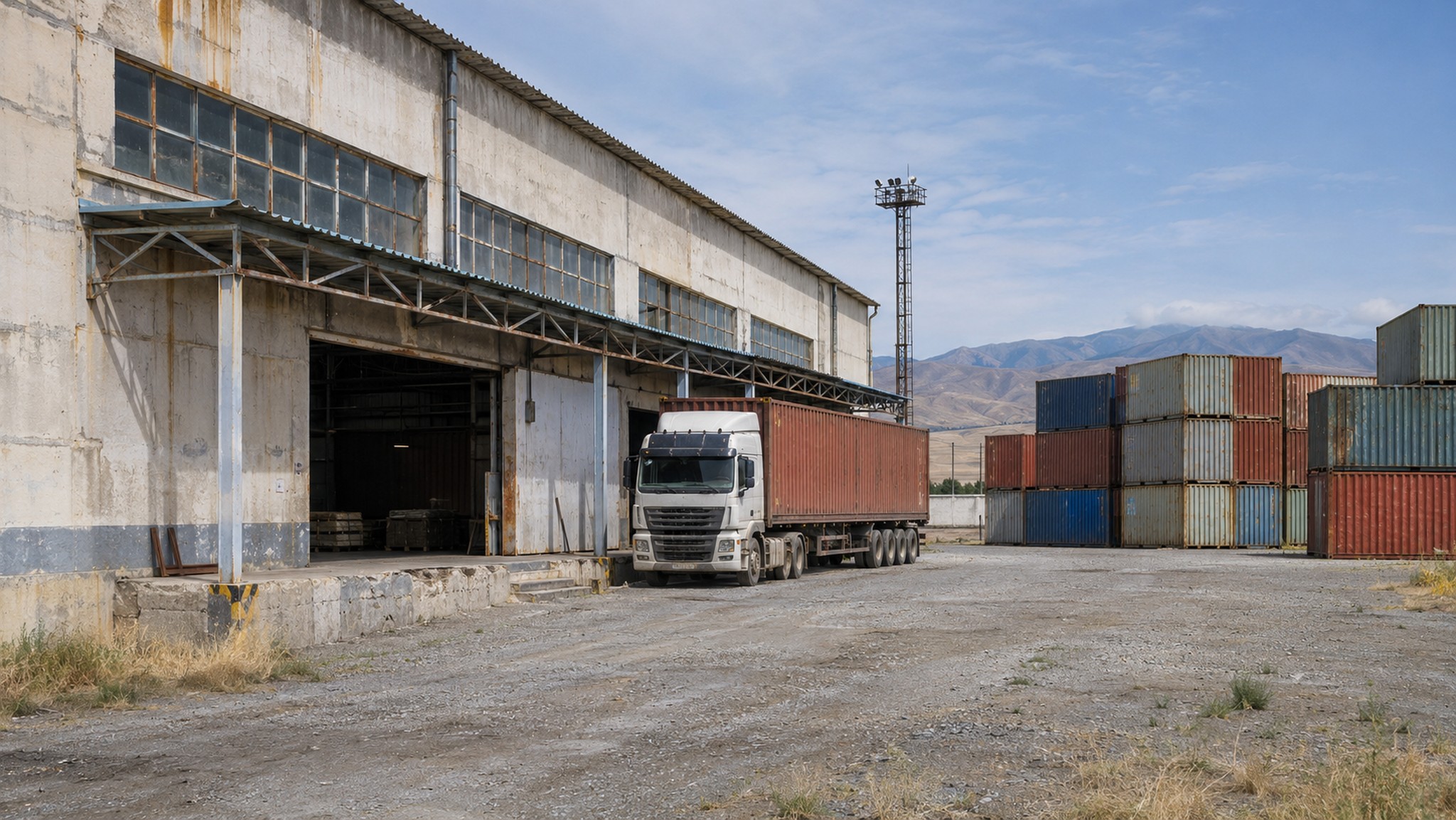
Cover image generated by AI; not a documentary photograph.
Key facts
- The statutory storage period for ordinary goods under Kazakhstan Customs temporary storage is a maximum of 4 months and cannot be extended.
- Under Kazakhstan Customs rules, arrival documents for goods transported by road must normally be submitted, and an application for the termination of the transit procedure must be filed, within 3 hours after arrival at the place of delivery.
- Under Kazakhstan Customs rules, goods and the complete set of documents are subject to administrative detention if, after more than 4 months, the goods have still not been released and no exit permit has been obtained.
- Kazakhstan Customs temporary storage is a transitional operational stage, whereas customs transit is an independent customs procedure.
- Bonded warehouses under Kazakhstan Customs may, with customs approval, carry out grading, sorting, repackaging, label affixing, and other operations.
- Kazakhstan Customs temporary storage warehouses must be equipped with radioactive-material monitoring systems, weighbridges, video surveillance, perimeter fencing, and boom barriers.
FAQ
Which Chinese goods enter Kazakhstan Customs temporary storage?
Goods transported to Kazakhstan by rail on China-Europe Railway Express services or by cross-border road transport usually enter a customs temporary storage warehouse if the declaration and release formalities have not been completed upon arrival and the goods have not been transferred directly to customs transit, a customs warehouse, or another procedure. They remain there pending completion of the necessary formalities.
How long can ordinary goods remain in Kazakhstan Customs temporary storage?
The statutory storage period is calculated from the day after the date on which the customs authorities register the relevant storage documents. For ordinary goods, the maximum period is 4 months and cannot be extended; in rare special cases, such as international postal express shipments, the maximum is 6 months.
What happens after goods exceed the Kazakhstan Customs temporary storage period?
After more than 4 months, goods that have still not been released by the customs authorities and have not obtained an exit permit, together with the complete set of documents, are subject to administrative detention. The general custody period is 30 calendar days, and 24 hours for perishable goods. Within this period, the rights holder may complete the outstanding formalities, settle the related charges, and apply for the return of the goods. If the violation is still not remedied, the customs authorities will initiate the statutory disposal procedure.
What is the difference between Kazakhstan Customs temporary storage and customs transit?
Customs transit is an independent customs procedure under which foreign goods may be transported under customs seal supervision, exempt from import customs duties and VAT. Temporary storage is not a customs procedure but a transitional operational stage during which goods remain under customs supervision.
How should Chinese exporters choose between temporary storage and a customs bonded warehouse?
For ordinary goods, temporary storage is available for up to 4 months, while the duty-free storage period for ordinary goods in a bonded warehouse is up to 3 years. The former is suitable for goods intended for a short stay while customs declaration, payment of duties and taxes, and distribution are being prepared. Businesses may transfer the goods to the latter before the temporary-storage period expires if it will serve as a regional consolidation and distribution hub in Central Asia, if buyers are still being sought, or to ease working-capital pressure caused by concentrated customs-duty payments.