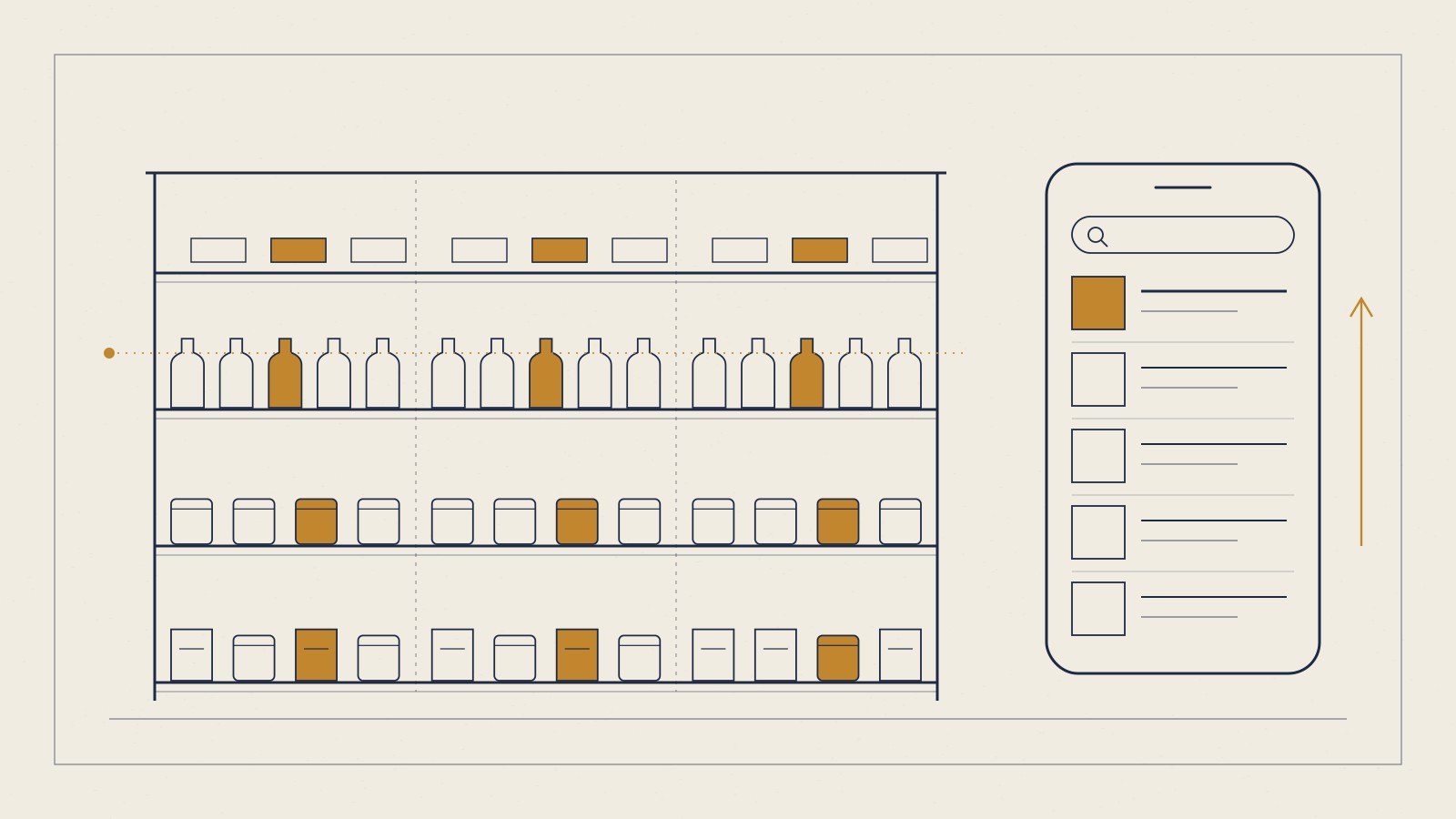
Kazakhstan’s amended Internal Trade Rules take effect next week, and retailers face two concrete changes. The existing rule that at least 30% of shelf space goes to Kazakh-made goods must now be met in every product subcategory, every category and the store as a whole. Online marketplaces, meanwhile, have to rank products carrying the “Made in Kazakhstan” mark higher in search results. For Chinese brands that sell imported goods through Kazakh retail chains and e-commerce platforms, both shelf space and search visibility will be harder to win.
The order and the start date
The changes come from Order No. 235-NK, signed on 14 August 2026 by the acting Minister of Trade and Integration and registered with the Ministry of Justice on 17 August under No. 39603. It amends the Internal Trade Rules approved by Order No. 264 of 27 March 2015. Under its paragraph 4, the order enters into force 60 calendar days after its first official publication. It was published on 19 August in the official electronic register of legal acts, and the accounting portal Uchet.kz puts the start date at 19 October. Trade and Integration Minister Arman Shakkaliyev told the government meeting on 13 October that the requirements apply from 20 October. With only a day between the two, suppliers are better off planning for the earlier one.
Same quota, stricter arithmetic
Category 1–4 stores were already required to devote at least 30% of food shelf space and at least 30% of non-food shelf space to domestic products. The amended rules apply the threshold three times over: to each product subcategory, to each category and to the store overall.
The share is measured in facings: the number of facings of Kazakh-origin products divided by all facings on the shelf, times 100, calculated separately at each level. A store can no longer hit its overall number by leaning on a few categories where local supply is plentiful.
Placement is tightened too. Domestic goods must sit in the central display zone of each category and subcategory, at eye level, next to best-selling items, and be marked with a “Made in Kazakhstan” sign.
If there are not enough Kazakh products, the gap can be filled with other goods, but only after a set procedure. Shelf space is allocated on written requests from domestic producers or suppliers; if none arrive, the store must send a request to the Unified Register of Domestic Producers; only if requests still fall short can the remaining space go to other products.
Marketplaces and classifieds
Rules related to this news
- Can two Kazakhstan resident companies settle in US dollarsForeign-currency operations between Kazakhstan residents within Kazakhstan are prohibited except for cases listed in t…Text and legal basis →
- How long is a Kazakhstan work permit valid?Categories (Rules under Labour Ministry Order No.Text and legal basis →
- China Kazakhstan rail freight volume 2025In 2025 China–Kazakhstan rail freight was 35.6 million t (+11%); road freight about 8 million t (+40%); about 85% of C…Text and legal basis →
E-commerce platforms must run software that gives priority to “Made in Kazakhstan” products in search results. Searches built on a user’s personalised parameters are exempt. Contracts between a platform and its sellers must include terms requiring sellers to comply with the rules on selling through the platform.
Classified-ad platforms must register and identify advertisers through two-factor authentication, using a number from a Kazakh mobile operator or another legally permitted method, and integrate with the National Bank’s anti-fraud centre.
What it means for Chinese companies
Suppliers to retail chains should work out which category and subcategory their products fall into. Where local alternatives are plentiful, imported goods will get fewer eye-level, mid-shelf slots, so display agreements are worth reviewing before the rules kick in.
Companies that already manufacture or assemble in Kazakhstan may come out ahead, since Kazakh-origin goods get priority both on the shelf and in search. The order itself does not change how origin is determined; existing origin rules still apply.
Sellers on Kazakh marketplaces should expect updated seller agreements and shifts in search ranking. Personalised recommendations fall outside the rule, and how platforms separate the two will only become clear in practice.
Cover image: AI-generated illustration, not a photograph and not a direct depiction of the events described.
Sources:
Government of Kazakhstan (primeminister.kz), https://primeminister.kz/ru/news/novye-trebovaniya-po-obyazatelnoy-dole-kazahstanskih-tovarov-vstupayut-v-silu-dlya-torgovyh-setey-s-20-oktyabrya-31991
Uchet.kz, https://uchet.kz/news/sdelano-v-kazakhstane-trebovaniya-k-magazinam-i-marketpleysam-rasshirili/
Text of Order No. 235-NK (zakon.uchet.kz legal database), https://zakon.uchet.kz/rus/docs/V2600039603
Current text of the Internal Trade Rules (zakon.uchet.kz legal database), https://zakon.uchet.kz/rus/docs/V1500011148
Key facts
- Order 235-НҚ of the Ministry of Trade and Integration of Kazakhstan amended the “Rules on Domestic Trade” and will enter into force 60 calendar days after publication.
- Category 1–4 stores must ensure that domestic goods account for 30% of display space at each of three levels: every product subcategory, every product category and the store as a whole.
- The share of shelf facings occupied by domestic goods is calculated by dividing the number of shelf facings occupied by domestic goods by the total number of shelf facings and multiplying by 100.
- E-commerce platforms must prioritize goods marked “Made in Kazakhstan” in non-personalized search results.
- Display space is allocated on the basis of written applications from domestic manufacturers or distributors; if there are insufficient applications, the store must submit a request to the unified register of domestic manufacturers.
- Classified advertising platforms must use two-factor authentication to register and identify advertisers and must connect to the anti-fraud centre of the National Bank of Kazakhstan.
FAQ
When will the new rules enter into force?
Order 235-НҚ provides that it will enter into force 60 calendar days after its first official publication; the government announced October 20 as the effective date, while the accounting portal Uchet.kz lists October 19, so suppliers may prepare for the earlier date.
How is the 30% display share calculated?
It is calculated by shelf facings: the number of shelf facings occupied by domestic goods is divided by the total number of shelf facings and multiplied by 100. The share must be at least 30% at each of three levels: every product subcategory, every product category and the store as a whole.
Where must domestic goods be placed in stores?
Domestic goods must be placed in the middle of the display area for each category and subcategory, at eye level and next to best-selling products for cross-merchandising, and must be identified with a “Made in Kazakhstan” sign.
What obligations do e-commerce platforms have?
Platforms must have software that gives priority to goods marked “Made in Kazakhstan” in search results. This requirement does not apply if the search results are generated using individualized user parameters.
What impact will the rules have on Chinese companies already producing locally in Kazakhstan?
Products of Kazakhstani origin will gain relative priority on shelves and in search rankings. The order itself does not change the criteria for determining “Kazakhstani origin,” which remain subject to the current rules of origin.