According to the Ministry of National Economy of the Republic of Kazakhstan, Deputy Prime Minister and Minister of National Economy Serik Zhumangarin met with Chinese Minister of Finance Lan Fo'an during the Second Tianshan Forum on Regional Economic Cooperation in Central Asia to review preparations for establishing a dedicated joint investment fund for the Trans-Caspian International Transport Route (TITR / Middle Corridor).
What are the background and target size of the joint investment fund?
The initiative to establish the fund was put forward by Kazakhstan during the bilateral meeting between the heads of state of Kazakhstan and China in Shanghai in July 2026. Relevant authorities in both countries are actively advancing preparations to establish the Kazakh-Chinese private equity fund, which has a preliminary target ceiling of up to $200 million with room for subsequent capital expansion. Zhumangarin recommended that both sides designate lead financial institutions as early as possible to harmonize operational standards.
What key mechanisms form the bilateral financial cooperation framework?
To transition from framework consensus to tangible project execution, Kazakhstan noted that the two nations are building a complementary financial cooperation structure based on three primary pillars: the Kazakh Invest Fund involving Silk Road Finance Corporation; the Kazakh-Chinese private equity fund involving National Management Holding Baiterek and the Silk Road Fund; and a project debt and insurance financing mechanism bringing together Baiterek, the Development Bank of Kazakhstan, China Development Bank, Export-Import Bank of China, Bank of China, Industrial and Commercial Bank of China (ICBC), and Sinosure.
How is the proposed "single window" financing model designed?
Kazakhstan proposed creating a single-window coordination mechanism for Kazakh-Chinese project financing and insurance without establishing new administrative bodies. This model is designed to assemble customized, comprehensive financial packages for each priority project—combining long-term debt, insurance coverage, surety and collateral instruments, alongside Renminbi-denominated financing and equity contributions where required. The two sides plan to select initial pilot projects for end-to-end tracking to dismantle institutional bottlenecks in executing major investments. Both sides also held in-depth discussions on deepening credit collaboration with the Export-Import Bank of China for transport and municipal utility infrastructure projects.
FAQ
What key sectors will this dedicated fund target?
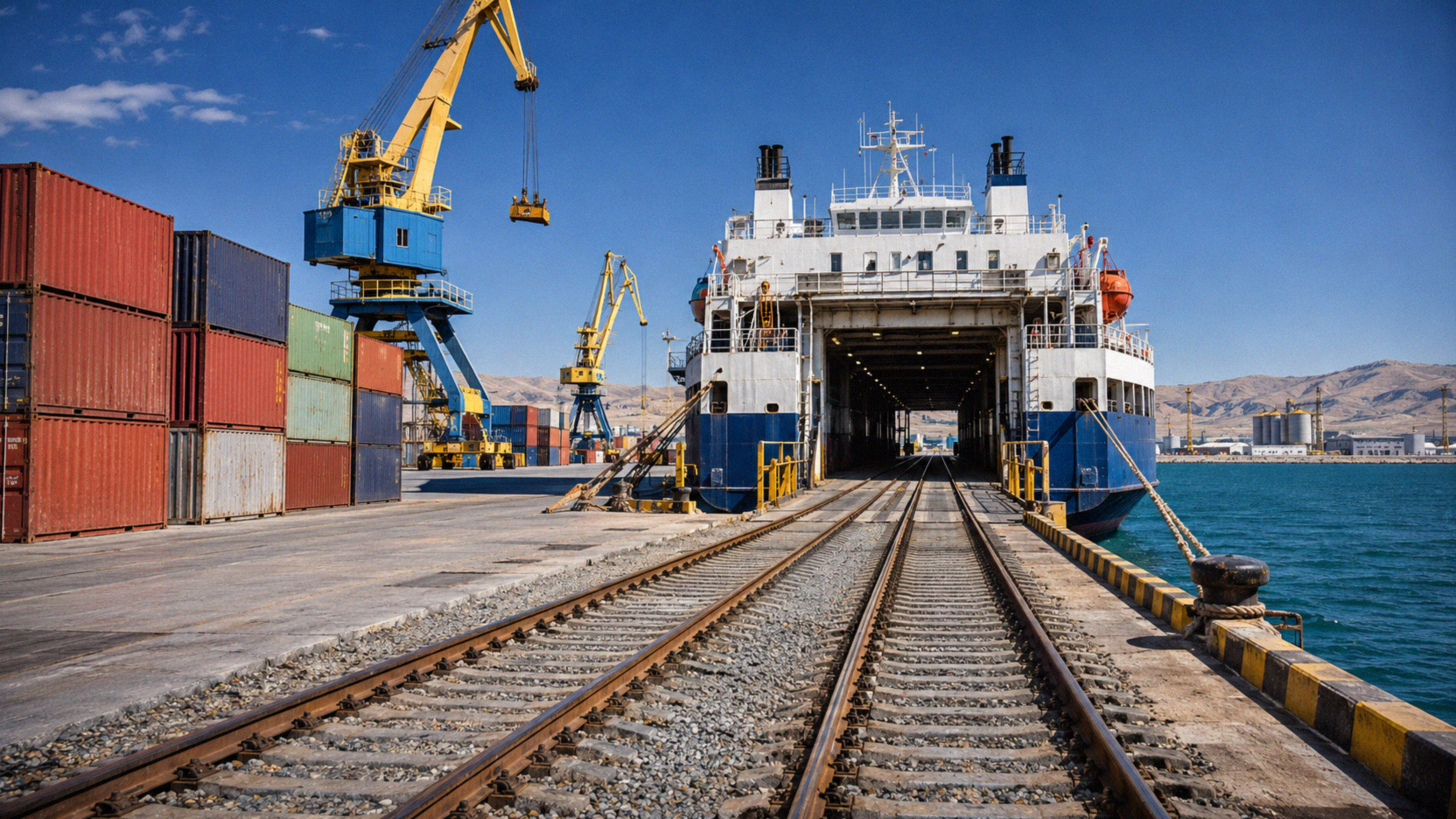
The fund is planned to support transport logistics, port warehousing facilities, and related infrastructure along the Trans-Caspian International Transport Route (Middle Corridor).
Which key financial institutions from Kazakhstan and China are involved in this architecture?
Kazakh participants include NMH Baiterek and the Development Bank of Kazakhstan. Chinese participants include the Silk Road Fund, China Development Bank, Export-Import Bank of China, Industrial and Commercial Bank of China (ICBC), Bank of China, and Sinosure.
Rules related to this news
- China Kazakhstan rail freight volume 2025In 2025 China–Kazakhstan rail freight was 35.6 million t (+11%); road freight about 8 million t (+40%); about 85% of C…Text and legal basis →
- MOFCOM country guide Kazakhstan 2025China's Ministry of Commerce published the Country Guide for Outbound Investment and Cooperation: Kazakhstan (2025 edi…Text and legal basis →
- What is the Alatau Industrial Trade and Logistics Complex SEZ in Zhambyl region?The Alatau Industrial Trade and Logistics Complex SEZ was created by Government Decree No.Text and legal basis →
What instruments may the proposed Kazakh-Chinese project financing and insurance arrangements include?
Under the framework discussed, the proposed financing arrangements may include long-term loans, credit insurance, equity investments, and Renminbi-denominated financing support; the specific structure remains under negotiation.
Why was the single-window financing model proposed?
The goal is to eliminate the costs of setting up new administrative entities, connect approval channels directly across policy banks, commercial lenders, and investment funds, and accelerate financial close and project rollout.
What does this news mean for Chinese enterprises?
Chinese engineering, construction, and logistics enterprises engaged in transport, railway, port terminal, and municipal infrastructure projects along the Trans-Caspian corridor may have access under the proposed arrangements to more systematic, coordinated backing from sovereign funds, policy loans, and export credit insurance.
Related reading
- More industry and policy updates: Kazakhstan investment and project news
- Setting up a project company: Company registration in Kazakhstan
Sources
- Ministry of National Economy of the Republic of Kazakhstan (gov.kz), 2 November: https://www.gov.kz/memleket/entities/economy/press/news/details/1322206?lang=ru